About Dr. Deborah Custer
A single, expert educator behind every plan
Deborah Custer, PhD, LLC is a small practice by design. Families in Redmond, Bellevue, Bothell, Kirkland, and the surrounding Eastside work directly with Dr. Custer — the same person who reviews the records, does the testing, teaches the sessions, and sits beside you at the school meeting.
Meet Dr. Custer
Ph.D. in educational psychology — and decades in the room with children
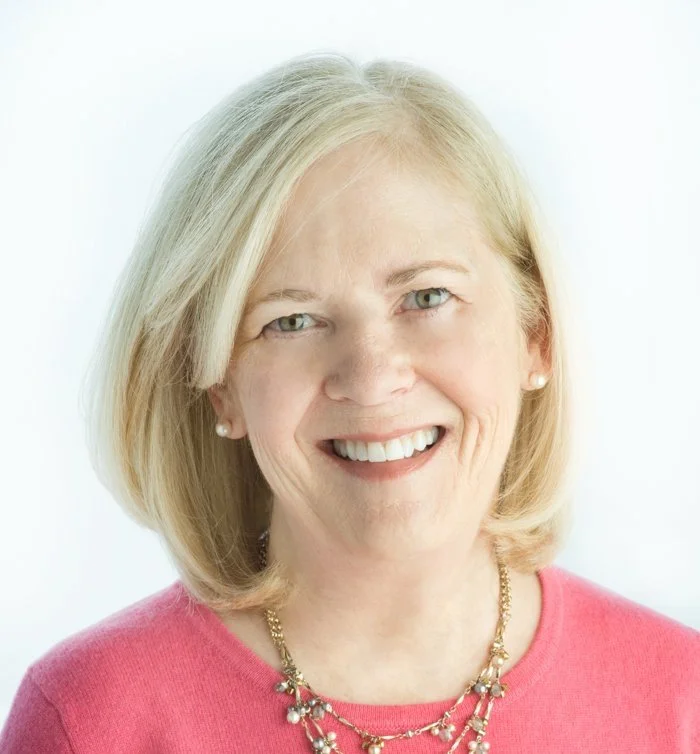
Deborah Custer, Ph.D.
Educational consultant, evaluator, and tutor
Dr. Custer holds a Ph.D. in educational psychology — an important distinction from a doctorate in education, which is a different field. Educational psychology is the study of how children develop and learn, how learning is measured, and identifying instruction that actually changes outcomes. That training is why testing here is never an end in itself: it exists to answer a teaching question.
Her career has been spent at the intersection of assessment and instruction: identifying precisely where a student's skills break down, then teaching in the sequence that repairs them. That combination is unusual. Many evaluators never teach the students they test, and many tutors never see formal assessment data. Working across both means nothing is lost in translation between a report and a Tuesday afternoon lesson.
The focus is on preschool and elementary students, with experience supporting students through high school. Work spans early reading foundations and dyslexia, written expression, math reasoning, attention and executive functioning, and the study systems students need as coursework becomes more independent.
Empowering parents with knowledge and tools to support their child's learning and confidently navigate the educational system.
Background & experience
What stands behind the recommendations
Dr. Custer has extensive experience in medical and school settings. She is a nationally certified school psychologist who recently retired from the Northshore School District in Washington State. She has served as the director of a pediatric behavioral disorders feeding clinic, developmental diagnostician of infants and young children with genetic disorders, and as a school psychologist in Maryland, Illinois, and Washington State. Dr. Custer published studies on neurodevelopmental profiles of infants and toddlers in peer-reviewed scientific journals. In the clinical setting, she held faculty appointments at the Johns Hopkins University and George Washington University Schools of Medicine.
Dr. Custer specializes in diagnostic educational evaluations to determine a child's strengths and areas of need in the development of cognitive and learning processes. She provides one-on-one remedial interventions to build skills and close gaps. She also provides support and coaching for parents who are trying to understand and support their child's educational progress and navigate the educational system.
Education
- M.S. and Ph.D. in Educational Psychology, University of Wisconsin–Madison
- B.S. in Elementary Education, University of Wisconsin–Stevens Point
Ph.D. in Educational Psychology
Doctoral training in how children develop, learn, and are assessed.
Decades of classroom and clinical practice
Years of classroom and student observation, assessment, and intervention planning with preschool through the high school years.
Broad national experience
Work across many hospitals, school districts, and regions of the country — public, private, and with homeschooling parents — rather than a single local system.
Parent coaching and consultation
Guiding parents through child development, how children learn, and how to navigate the educational system with confidence and specific tools.
Support is provided to parents who send their child to public or private schools, as well as those who homeschool. Sessions are held in person, because direct interaction provides stronger teaching and learning outcomes. Online sessions may be considered on a case-by-case basis depending on student needs and circumstances.
How Dr. Custer works
Principles that shape every case
- Start with evidence: records, work samples, and testing data before conclusions
- Say plainly what a child needs — even when the answer is fewer services, not more
- Teach skills, not just content, so gains hold after tutoring ends
- Keep parents fully informed with concrete progress, not vague reassurance
- Write recommendations schools can implement, in the language teams already use
- Protect a student's confidence as carefully as their transcript
Who this is for
Families who usually reach out
When something is not adding up
A bright young student is working hard and still slipping. Reading is slow and effortful, a student can't spell but seems to be able to read, writing takes three times longer than it should, or math facts never became automatic. Teachers describe a capable child; the report card does not match.
These families usually begin with a psychoeducational evaluation so decisions rest on data rather than guesswork, then move into targeted tutoring.
When school support feels stuck
An IEP or 504 Plan exists on paper but nothing is changing. A district declined an evaluation request. A placement decision is looming and every option sounds equally plausible.
These families typically start with educational consultation and parent coaching — records review, preparation, and representation at school meetings.
Related support
Other ways Dr. Custer helps Washington families
Educational Consultant
Clear guidance through IEPs, 504 Plans, and school placement decisions.
Learn moreEducational Evaluator
Comprehensive testing plus the teaching that follows it.
Learn moreTutor
Subject-specific tutoring for preschool and elementary students.
Learn morePrivate Tutor
One-to-one instruction built around how your child actually learns.
Learn moreTalk with Dr. Custer directly
Every consultation is with Dr. Custer herself — no intake team, no sales script. Call (847) 651-7892 or send a message describing what you are seeing, and you will get a straightforward answer about whether this practice is the right fit.